
Heat Pump Solutions for Multi-Unit Buildings
We support heat pump upgrades for multi-unit buildings through assessment-led planning and implementation pathways aligned with building conditions and program requirements.
How Heat Pumps Are Applied in Multi-Unit Buildings
In multi-unit buildings, heat pump systems are applied as centralized or distributed heating and cooling solutions depending on building layout, load profile, and existing infrastructure. The focus is not on explaining operating principles, but on how heat pump systems integrate with building-level mechanical and electrical conditions. Unlike single-family applications, heat pump upgrades in multi-unit properties must balance energy performance, tenant impact, constructability, and long-term operational reliability at the building level.
Heat pump applications in multi-unit buildings are shaped by practical considerations such as distribution system compatibility, available mechanical space, electrical service limitations, and the need to maintain uninterrupted heating during transition periods.
As a result, heat pumps are rarely implemented as a one-time, full system replacement. Instead, they are introduced through staged, hybrid, or zoned approaches that reflect how buildings actually operate.
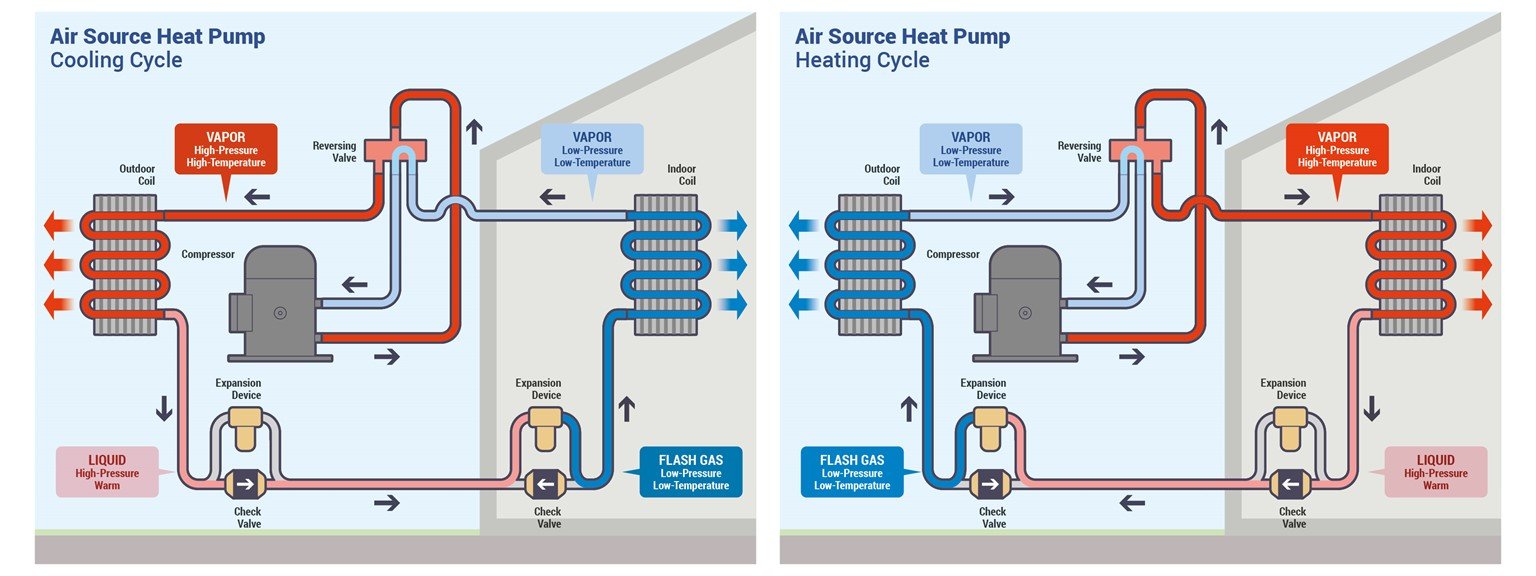
For multi-unit applications, system evaluation focuses on part-load behavior, control strategy, and integration with existing distribution systems. These factors directly affect operational stability, maintenance requirements, and tenant comfort consistency across the building.System selection therefore follows an assessment-led process, where heat pump capacity, zoning logic, and control boundaries are defined in relation to how the building is used, not simply based on nameplate performance.
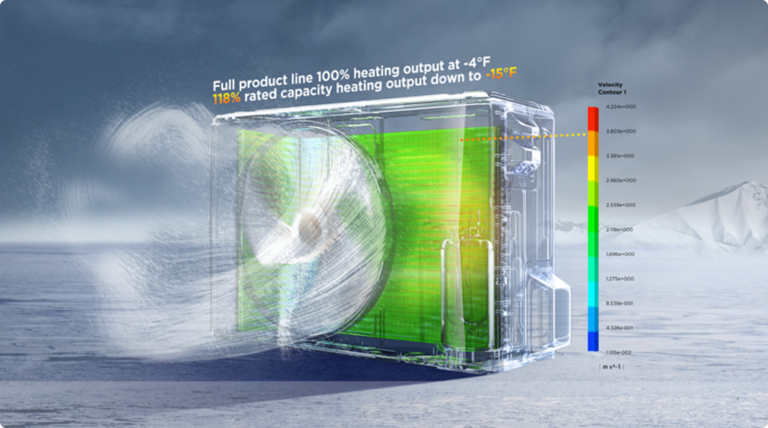
Cold-climate operation is assessed as part of system suitability analysis, including temperature performance limits, defrost behavior, and the role of supplementary or backup systems where required.Rather than treating cold-weather capability as a marketing feature, it is evaluated as an operational constraint that must be addressed through proper system design and sequencing.
The decision to deploy heat pumps in a multi-unit building is not only technical, but also financial and operational. Timing, phasing, and alignment with planned capital upgrades often determine whether a project proceeds efficiently.Energy assessments help identify where heat pumps deliver the greatest impact within an overall upgrade pathway, and where deferral or partial implementation may be the more appropriate choice.
Implementation Pathways for Heat Pump Upgrades
Assessment & Baseline Definition
Each project begins with an energy assessment or technical review to establish baseline conditions, system constraints, and upgrade feasibility.
This step defines load assumptions, electrical capacity considerations, and integration boundaries before any system configuration is selected.
Scope Structuring & System Integration
Based on assessment outcomes, heat pump scopes are structured to align with building layout, existing mechanical systems, and operational needs.
This includes defining system boundaries, zoning strategies, and interfaces with existing heating or distribution infrastructure.
Phased or Hybrid Implementation
In many cases, heat pump upgrades are implemented in phases or as part of a hybrid configuration to manage capital deployment and minimize tenant disruption.
Sequencing is coordinated with planned maintenance cycles, electrical upgrades, and operational constraints.
Verification, Documentation & Program Alignment
Post-installation verification and documentation are coordinated to support operational handover and, where applicable, compliance with incentive or financing program requirements.
Performance outcomes are reviewed at the building level rather than individual units.
System selection follows pathway definition — not the reverse.
This approach reduces implementation risk and supports long-term operational outcomes for multi-unit buildings.
Program & Incentive Alignment
Heat pump upgrades may be eligible for government incentives or financing programs depending on building type, ownership structure, scope definition, and compliance with program requirements.
Eligibility is determined through proper assessment, documentation, and sequencing rather than equipment selection alone. Program alignment is therefore considered during project definition, not after installation.
Our role is to support assessment-led planning and program-ready implementation for heat pump upgrades in multi-unit and portfolio-based projects, ensuring technical decisions align with operational realities and funding requirements.